
The best AEO tracker gives you a number you can move, not a report you file away. It runs your strategic prompts across ChatGPT, Perplexity, Gemini, and AI Overviews on a recurring cadence, tells you who gets cited instead of you, and shows whether that gap is growing or closing. That's the difference between a passive dashboard and a real answer engine optimization tracker.
Six tools do this well in 2026. Here's how they compare on tracking depth, engine coverage, and price.
AEO Trackers Compared at a Glance
| Tool | Best for | Starting price | Engines tracked | Tracking cadence |
|---|---|---|---|---|
| xSeek | Action-first tracking with clear recommendations | $249.99/mo | ChatGPT, xAI, Perplexity, AI Overview, Gemini, Claude, Copilot | Daily |
| Otterly.AI | Affordable entry-level monitoring | $29/mo | ChatGPT, AI Overviews, Perplexity, Copilot + add-ons | Daily |
| Profound | Enterprise multi-engine depth | $99/mo Starter | ChatGPT, Perplexity, Gemini, AI Mode, Claude, Copilot, more | Daily |
| Peec AI | Accurate citation data, unlimited seats | €89/mo | ChatGPT, Perplexity, AI Overviews + add-ons | Daily |
| Scrunch AI | Multi-brand, multi-region tracking | $250/mo | ChatGPT, Gemini, Perplexity, others | Daily |
| Nightwatch | SEO teams adding AEO to their stack | $39/mo | ChatGPT, Claude, Gemini | Daily |
What Makes a Good AEO Tracker
An AEO tracker needs to answer three questions every week: Are you getting cited? By which engines? And is the number going up or down?
The tools that answer only the first question are monitoring tools. Real trackers answer all three. They store historical data, flag trend reversals, and surface the exact prompts where competitors are taking your share of voice. According to Princeton GEO research, structured content with cited sources earns up to 40% more AI citations, but you can't confirm whether your changes worked without baseline data to compare against.
The best trackers also separate citation rate from mention rate. An AI engine can name your brand in a response without linking to your site. That's a mention. When it links to you as a source, that's a citation. They have different values, and a good AEO tracker shows both.
1. xSeek
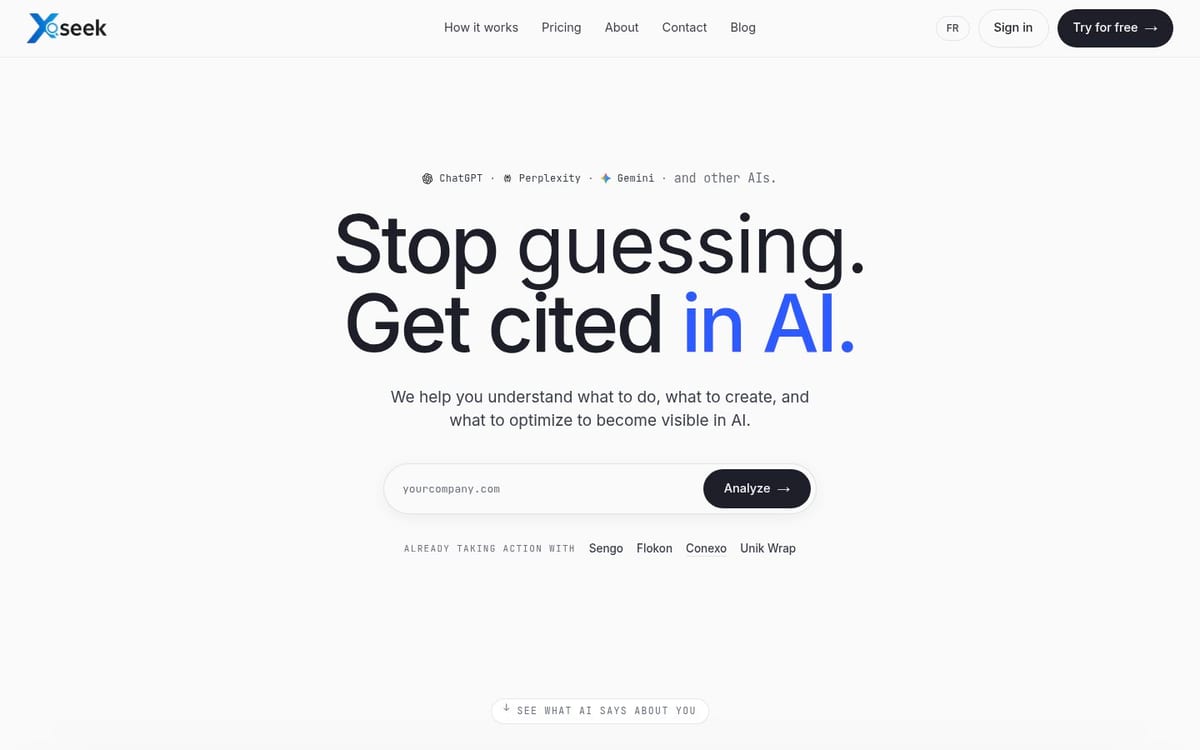
xSeek tracks your AI visibility across 7 engines (ChatGPT, xAI Grok, Perplexity, Google AI Overview, Gemini, Claude, and Copilot) and turns that data into a prioritized action plan. Where most trackers hand you a dashboard, xSeek tells you what to create next and why.
The platform runs your strategic prompts on a recurring cadence, builds a share-of-voice leaderboard showing which competitors get recommended instead of you, and generates content gap opportunities ranked by business impact. The CLI (xseek) integrates into developer workflows for teams that want to automate AEO audits in CI/CD.
Customers report measurable outcomes. Sengo, a Quebec-based services brand, went from invisible to recommended inside four months, with leads and signed contracts now arriving directly from ChatGPT. Unik Wrap recorded a 200% increase in daily AI clicks after acting on xSeek recommendations.
Pricing: Starter at $249.99/mo (50 prompts, 1 website, 10 opportunities), Growth at $499.99/mo (150 prompts, 3 websites, 25 opportunities, Backlink Agent), Scale at custom pricing (500 prompts, 10 websites). Strategic onboarding included on all plans.
Who it's for: Marketing leads and CMOs who want clarity on what to do, not just what the data says. Especially strong for brands starting their GEO journey that want a managed path from invisible to recommended.
2. Otterly.AI
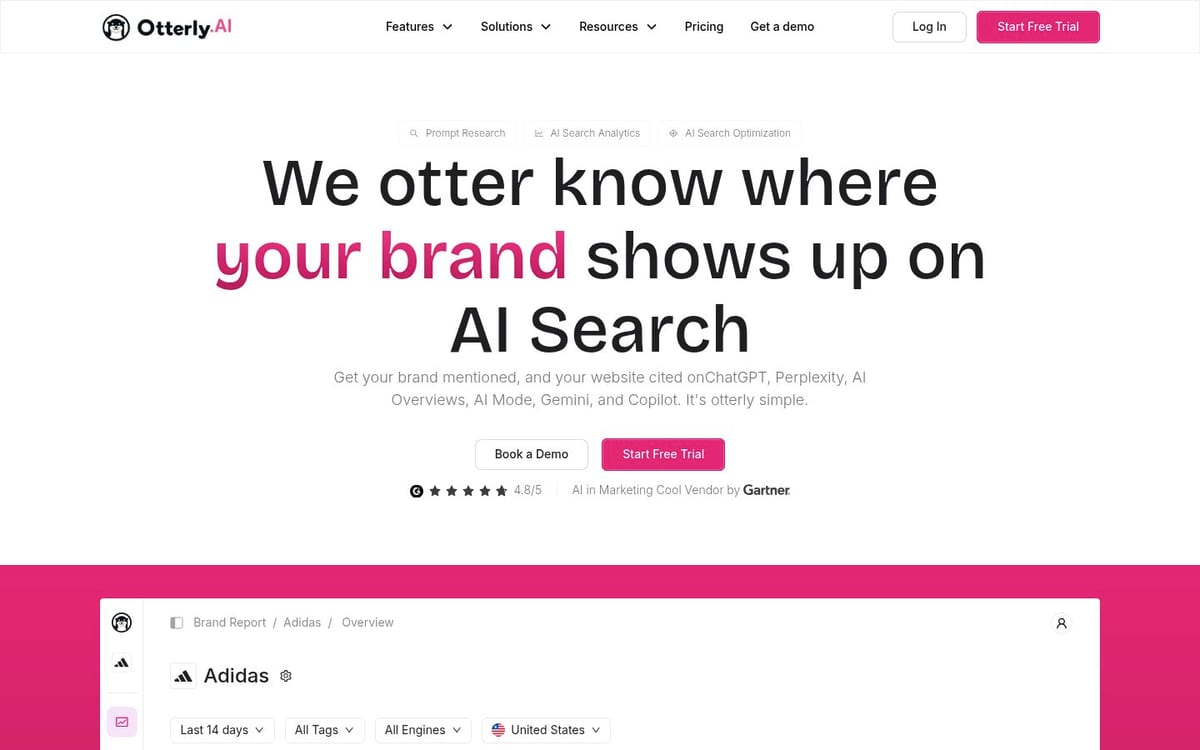
Otterly.AI is the fastest way to start tracking AI visibility without a large budget. Setup takes minutes. The Lite plan at $29/mo covers 15 prompts across ChatGPT, AI Overviews, Perplexity, and Copilot, with daily tracking and unlimited team members.
The platform turns your SEO keywords into AI prompts automatically, which is useful if you're coming from a traditional SEO background. The GEO audit feature checks your existing content against what top-cited pages do differently. A Looker Studio connector is available on the Standard plan for teams that need branded client reporting.
The limitation is execution depth. Otterly shows you where you stand and flags recommendations but doesn't generate content or connect to a publishing workflow. You'll need separate tools to act on what it surfaces.
Pricing: Lite $29/mo (15 prompts), Standard $189/mo (100 prompts, API, MCP, Agent Analytics), Premium $489/mo (400 prompts). Claude, Gemini, and AI Mode available as add-ons. Annual billing saves 15%.
Who it's for: Solo marketers, small teams, and agencies that need a quick, affordable read on AI visibility before committing to a larger platform.
3. Profound
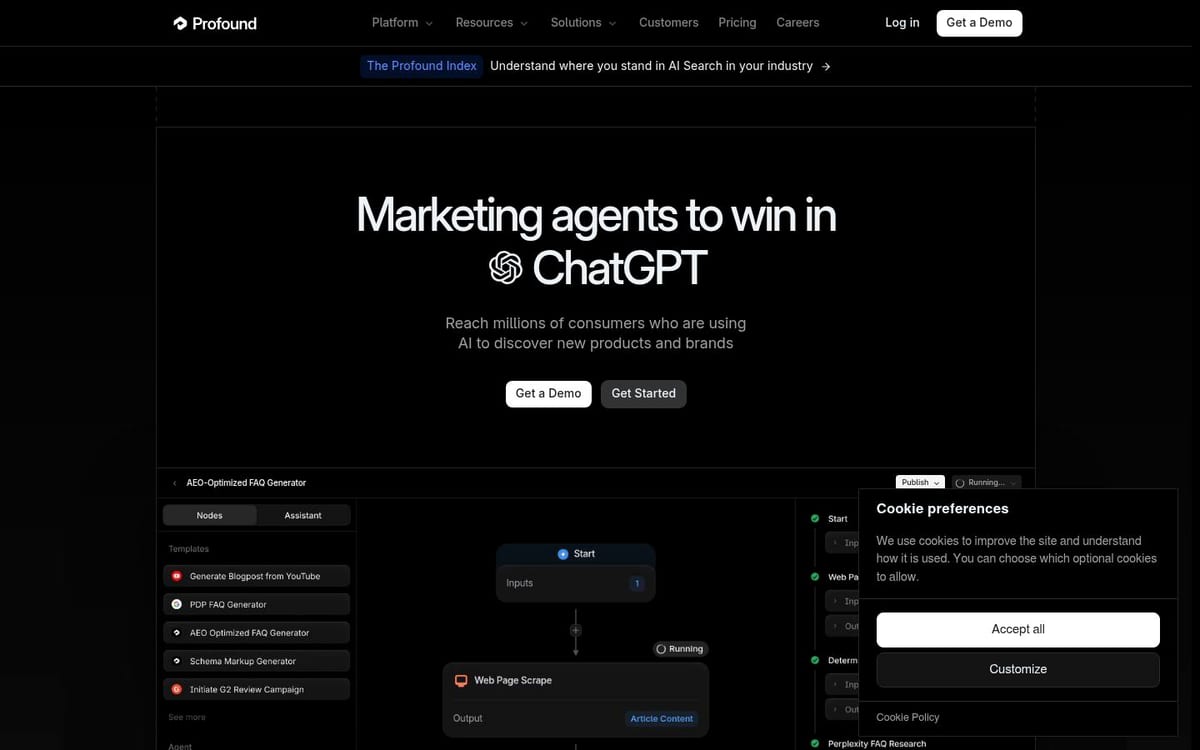
Profound covers more AI engines than any other tracker on this list: ChatGPT, Perplexity, Google AI Mode, Gemini, Microsoft Copilot, Meta AI, Grok, DeepSeek, Claude, and Google AI Overviews. For enterprise brands that need assurance their competitor isn't gaining visibility on an engine they're not tracking, that breadth matters.
The Conversation Explorer draws from a large database of real user queries to help you build prompt sets that reflect how buyers actually ask questions. Agent Analytics tracks how AI bots crawl your site, which is useful for diagnosing technical readiness gaps.
The cost scales quickly. Profound's Starter covers ChatGPT only at $99/mo. Perplexity and AI Overviews come in at the $399/mo Growth plan. Full engine access requires Enterprise pricing, which starts significantly higher. For smaller teams, this makes Profound one of the pricier entry points once you factor in the engines you actually need.
Pricing: Starter $99/mo, Growth $399/mo, Enterprise custom. A free demo is available but not a free trial.
Who it's for: Enterprise brands tracking 10+ AI engines across multiple products and regions. The engine coverage is its biggest differentiator.
4. Peec AI
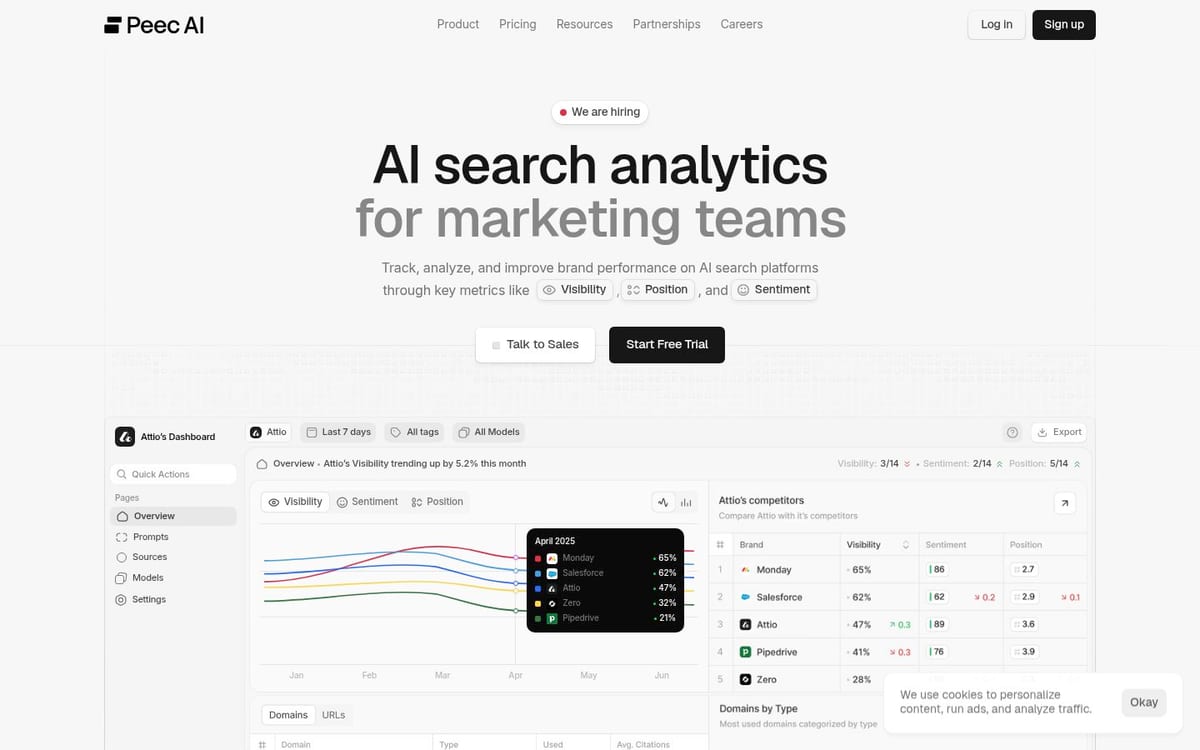
Peec AI uses UI scraping rather than API calls to capture what users actually see, not a sanitized API response. This matters because AI engines sometimes show sources differently in their UI than what the API returns. Peec's data reflects real user experience.
Every plan includes unlimited seats, which makes it popular with agencies. The Pitch Workspaces feature lets you share AI visibility reports with prospects to demonstrate the problem before they sign. The Looker Studio connector is available for live reporting.
The three-metric focus (visibility, position, sentiment) is clean but limited. Peec doesn't generate content or provide automated workflows. It tells you where you stand; your team handles what comes next. Baseline plans track ChatGPT, Perplexity, and AI Overviews, with Gemini, AI Mode, Claude, DeepSeek, Llama, and Grok available on request for an additional fee.
Pricing: Starter €89/mo (25 prompts), Pro €199/mo (100 prompts, Slack support). All plans include unlimited seats.
Who it's for: Marketing teams and agencies that prioritize citation data accuracy and need unlimited seats without cost scaling.
5. Scrunch AI
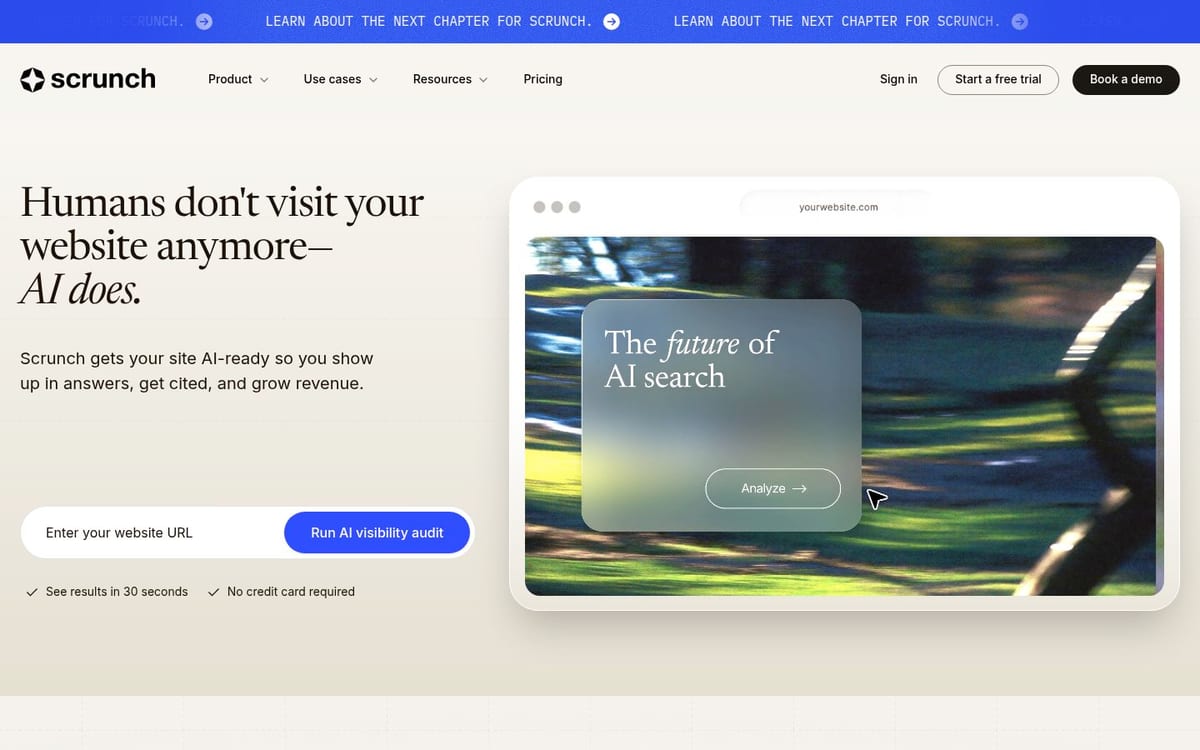
Scrunch AI tracks brand citations across ChatGPT, Gemini, Perplexity, and other engines, with a strong focus on competitive share-of-voice analysis. The Agent Experience Platform (AXP) creates a machine-readable layer of your site that AI agents can read more easily, which addresses both crawlability and citation potential at once.
Multi-brand and multi-region tracking are Scrunch's clearest strengths. Enterprise teams managing several product lines across different markets can organize tracking in one platform without messy workarounds. Bot and agent traffic insights surface structural issues affecting how AI systems interpret your site.
The gap is execution: Scrunch audits and flags issues but doesn't generate content. Acting on insights requires separate tooling or in-house resources. The $250/mo entry price is also higher than most monitoring-only tools.
Pricing: Starter from $250/mo. Enterprise pricing requires a sales conversation.
Who it's for: Enterprise teams with multiple brands or regions who need competitive share-of-voice benchmarking and technical AI readiness auditing.
6. Nightwatch
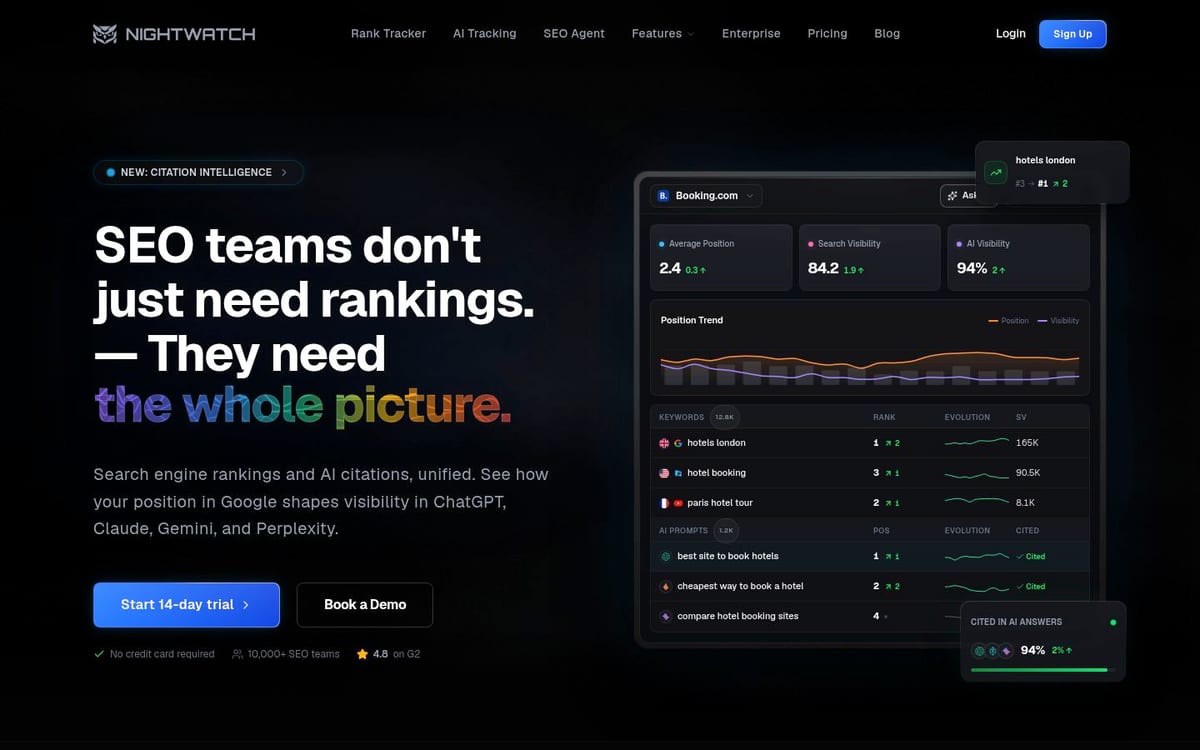
Nightwatch started as an SEO rank tracker and added AI/LLM visibility as an extension of its existing monitoring suite. If you're already tracking keyword rankings in Nightwatch, the AI tracking layer plugs in without switching tools or learning a new interface.
The AI tracking covers ChatGPT, Claude, and Gemini. A unified dashboard shows traditional SERP positions alongside AI mention data, so SEO teams can see both in one view. At $39/mo, it's the most affordable entry point on this list that includes AI visibility alongside SEO.
The depth is shallower than purpose-built AEO trackers. Nightwatch doesn't separate citation rate from mention rate, doesn't include prompt-level analysis, and doesn't provide content workflows. It works as an add-on for existing Nightwatch users, less so as a standalone AEO tracker.
Pricing: From $39/mo with a 14-day free trial.
Who it's for: SEO teams already using Nightwatch that want a lightweight AEO layer without changing platforms or significantly increasing costs.
How to Choose Your AEO Tracker
Start with your current team capacity. An AEO tracker only generates value if you act on what it surfaces. Tools like xSeek and AirOps are designed for teams that can ship content regularly. If you're in a monitoring phase, Otterly.AI or Nightwatch give you the data without the overhead.
Match coverage to where your buyers search. A team selling to enterprise buyers in North America can probably start with ChatGPT, Perplexity, and AI Overviews. A global consumer brand needs Gemini and Copilot too. AI search now influences 49% of product research decisions, according to Gartner, and the engine distribution varies by market and age group.
Budget for what you'll actually use. The highest-value AEO tracker is the one your team opens every week. A $99/mo tool you check monthly delivers less value than a $29/mo tool embedded in your workflow.
Check the tracking methodology. Tools that use UI scraping (Peec, Profound) reflect what users actually see. Tools that use API calls may return different data. For citation tracking in particular, this distinction affects accuracy.
What Metrics Your AEO Tracker Should Report
A solid AEO tracking report covers five things:
- Citation rate: How often AI engines link to your domain as a source
- Mention rate: How often your brand name appears in AI answers, with or without a link
- Share of voice: Your citation percentage versus named competitors for the same prompts
- Sentiment: Whether AI engines describe your brand positively, neutrally, or negatively
- Trend direction: Week-over-week or month-over-month change in all of the above
Missing any of these creates blind spots. A brand with a high mention rate but low citation rate is known but not trusted as a source. That's a different problem than being absent entirely, and it calls for a different fix.
FAQ
What is an AEO tracker?
An AEO tracker is a tool that monitors how your brand appears in AI search engine responses from ChatGPT, Perplexity, Gemini, and similar platforms. It runs your target queries on a recurring schedule, records whether your brand gets cited or mentioned, and shows trends over time. This lets you measure whether your content strategy is improving your AI visibility.
How is an AEO tracker different from a regular SEO rank tracker?
An SEO rank tracker shows where your pages appear in Google's blue-link results. An AEO tracker monitors whether your brand gets cited inside AI-generated answers. A page can rank #1 on Google and never appear in ChatGPT's response to the same query. The two tools measure different things, and you need both if your buyers use both channels.
What's the difference between an AEO tracker and an AEO checker?
An AEO tracker monitors your AI visibility continuously over time. An AEO checker runs a one-time audit of a specific page or URL to identify structural issues. Checkers are useful for diagnosing problems before publishing. Trackers are useful for measuring whether your changes worked and staying ahead of visibility shifts.
Which AEO tracker is best for small teams?
Otterly.AI at $29/mo is the best starting point for small teams. It covers the four most important engines (ChatGPT, AI Overviews, Perplexity, Copilot), runs daily tracking, and includes unlimited team members. For teams that want recommendations alongside the data, xSeek's Starter plan at $249.99/mo adds a dedicated account specialist and a clear action plan.
How many prompts do I need in an AEO tracker?
Most teams start with 15 to 30 prompts covering their main product categories, competitor comparisons, and top-of-funnel questions. A useful baseline is one prompt per core topic your brand competes on. If you're unsure, Otterly.AI has a free prompt calculator on their site. For deeper coverage, 100 prompts is enough for most mid-sized teams.
Can AEO trackers improve my visibility or only measure it?
Most AEO trackers measure visibility. A few, including xSeek and AirOps, connect the tracking data to content recommendations and generation workflows. If you want a single tool to both measure and improve AI visibility, you need a platform that closes the loop from insight to published content.
Does tracking AI citations affect my Google SEO?
No, AEO tracking is passive. The tool queries AI engines with your prompts and records the responses. It doesn't change your Google rankings or interact with your site in any way that would affect SEO. The two disciplines are complementary: strong SEO signals (structured content, authoritative sources, clear schema) also improve AI citation rates.
Sources & References
- Princeton GEO Research, KDD 2024: citation and mention impact data (+40% boost from citing sources)
- Gartner: What is Generative AI: AI influence on product research decisions
- xSeek Pricing: verified Starter, Growth, Scale plan details
- Otterly.AI Pricing: verified Lite, Standard, Premium plan details
- Profound Pricing: verified Starter, Growth, Enterprise tiers
- Peec AI: verified engine coverage and unlimited-seat model