
Moz remains a sensible SEO suite, but it is not the right fit for every team that needs AI search visibility. The best Moz alternatives depend on what you are replacing: traditional SEO data, enterprise AEO coverage, or the manual work between finding a visibility gap and fixing it.
For most marketing teams making that decision, xSeek is the strongest action-first option. Ahrefs and Semrush make more sense when you want a familiar SEO suite with AI features added. Conductor and BrightEdge fit larger organizations that need enterprise governance, while HubSpot AEO fits teams already working inside HubSpot.
What should you look for in a Moz alternative?
A Moz alternative should be judged by the work your team needs to complete after the dashboard shows a problem. A platform that reports a lost mention but gives you no practical next step may add another report without improving visibility.
Use these criteria before comparing providers:
- AI search coverage: Does it measure visibility in ChatGPT, Perplexity, Gemini, Google AI Overviews, Claude, and other engines that matter to your buyers?
- Prompt and citation data: Can you see the questions that trigger answers, the competitors mentioned, and the pages AI systems cite?
- Actionability: Does the platform turn a gap into an article brief, page recommendation, outreach task, or other concrete action?
- Traditional SEO depth: Do you still get keyword, backlink, rank, and technical site data if you are replacing Moz rather than adding AEO?
- Team fit: Can marketers, content teams, executives, and technical teams use the same data without building a second reporting layer?
- Commercial clarity: Can you understand the buying path before committing to a sales process?
This is a different decision from choosing a general AI visibility platform. The existing AI search monitoring guide is useful if your main question is which monitoring workflow to adopt. This article focuses on what a Moz user should switch to, keep, or add.
Best Moz alternatives at a glance
| Platform | Best fit for | Main strength | Main limitation |
|---|---|---|---|
| xSeek | Marketing teams that need an action plan | Visibility tracking, recommendations, content and outreach workflow | It is not a full replacement for every traditional SEO feature in Moz |
| Ahrefs | SEO teams that prioritize links and search data | Deep backlink and search research with AI visibility options | AI visibility is an add-on path, and Claude is not the core differentiator |
| Semrush | Teams already invested in Semrush | Broad SEO suite with AI search performance and content workflows | The platform can be more than you need if AEO is the only goal |
| Conductor | Enterprise teams with governance needs | Enterprise AEO, content, monitoring, APIs, and agent workflows | Pricing is sales-led and the platform is designed for larger organizations |
| BrightEdge | Large SEO organizations | Enterprise SEO plus AI search demand and optimization products | The breadth and sales-led model can be heavy for smaller teams |
| HubSpot AEO | HubSpot-centered marketing teams | AI visibility inside a broader CRM and marketing stack | The AEO product is still in beta and has narrower engine coverage than some dedicated platforms |
1. xSeek: best for turning Moz gaps into action
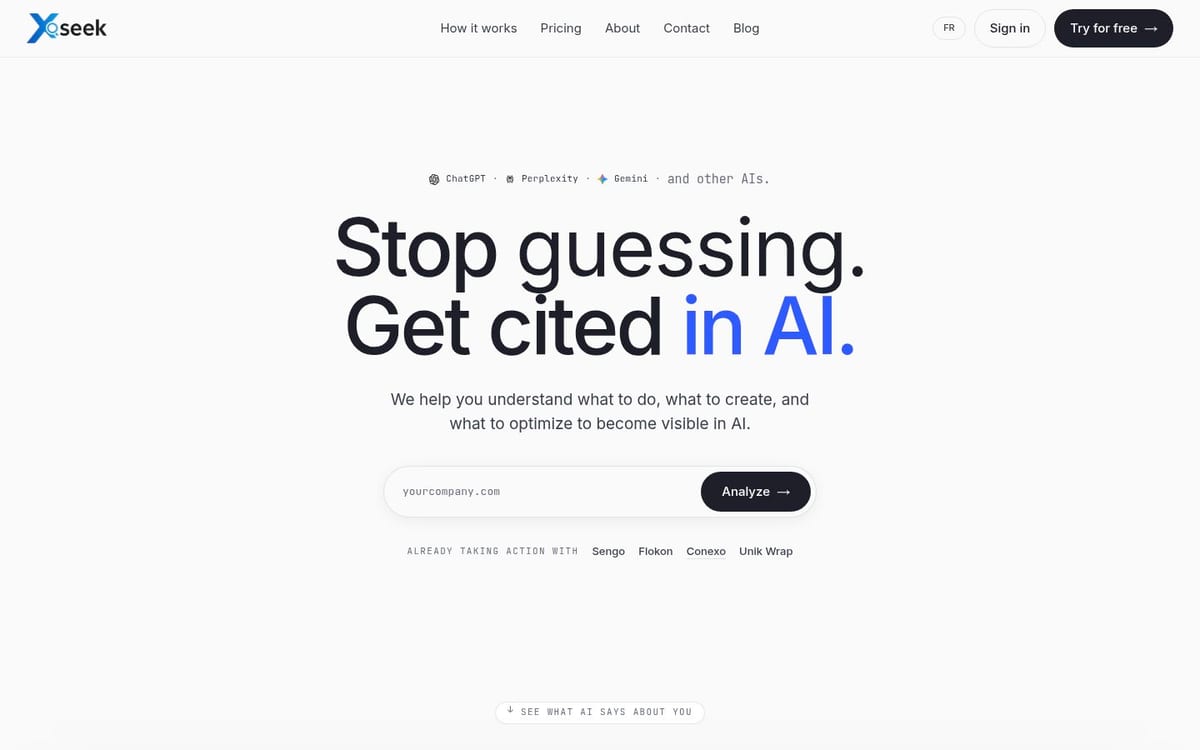
xSeek is the best Moz alternative for a team that wants to move from measurement to execution. It tracks mentions and citations across eight listed AI search models, shows where competitors are recommended instead, and turns those gaps into opportunities, content work, and backlink actions.
The difference is the workflow. Moz is strong when the starting point is a keyword, link profile, or site issue. xSeek starts with the question your buyer asks an AI system, then shows whether your brand appears, which sources are being used, and what to do next.
Pricing: xSeek lists Starter at $249.99 per month, Growth at $499.99 per month, and Scale as custom pricing. Starter includes 50 tracked prompts and one website. Growth includes 150 prompts and three websites. Each plan includes strategic onboarding, according to the official pricing page.
Best for: CMOs and marketing leads that want an action plan rather than another passive analytics dashboard.
Limitation: xSeek is not a one-for-one replacement for every traditional SEO workflow in Moz. If your team mainly needs backlink discovery, keyword difficulty, and classic rank tracking, you may keep a dedicated SEO suite alongside it.
2. Ahrefs: best for link-led SEO teams
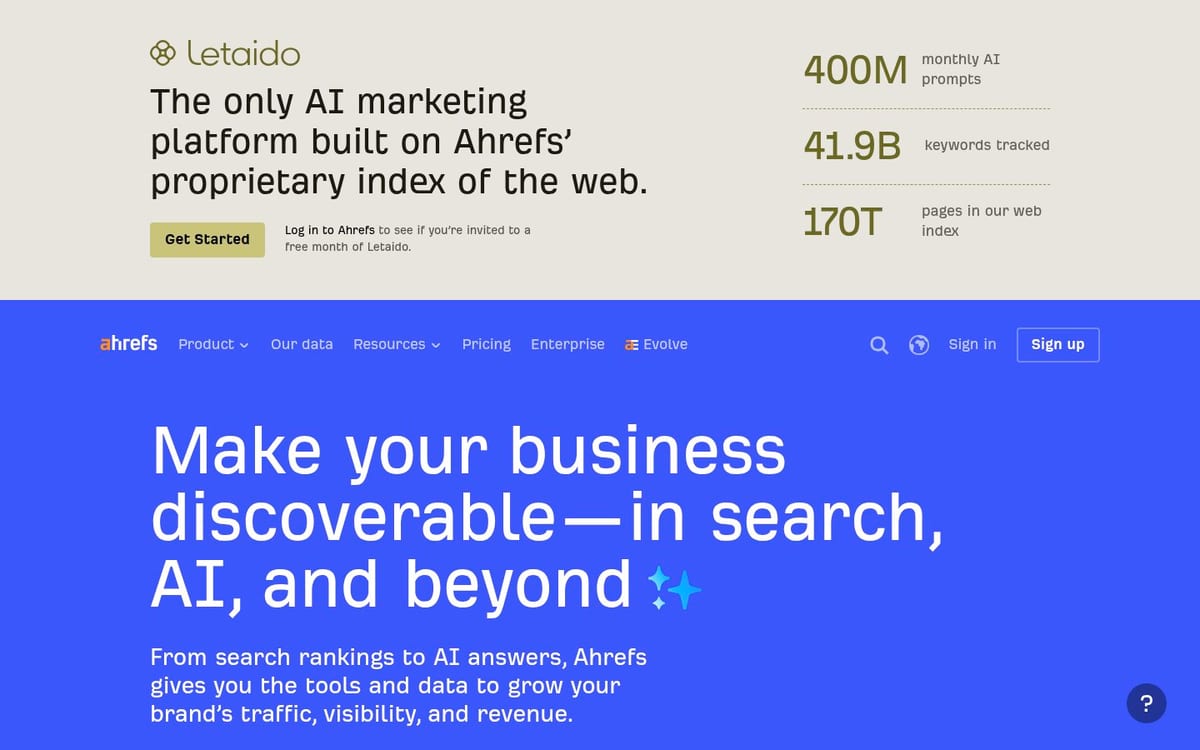
Ahrefs is the best Moz alternative when backlinks, organic search research, and content-led SEO remain the center of the job. Its AI visibility products add brand, mention, citation, and share-of-voice analysis to an established SEO data set.
Choose Ahrefs when your team wants one research environment for links, keywords, competitors, and AI search. It is also a practical choice if your analysts already know the interface and do not want to migrate their entire SEO process.
Pricing: Ahrefs separates its standard SEO plans from Brand Radar access. The Brand Radar page is the right place to verify current plans and add-on terms before buying.
Best for: SEO teams that see AI visibility as an extension of link and search research.
Limitation: Ahrefs is still research-first. You may need another workflow to turn a citation gap into a finished, brand-approved page or outreach campaign. If the main requirement is a prioritized action queue, compare it with xSeek rather than assuming a larger data set will solve the execution problem.
3. Semrush: best for an established Semrush stack
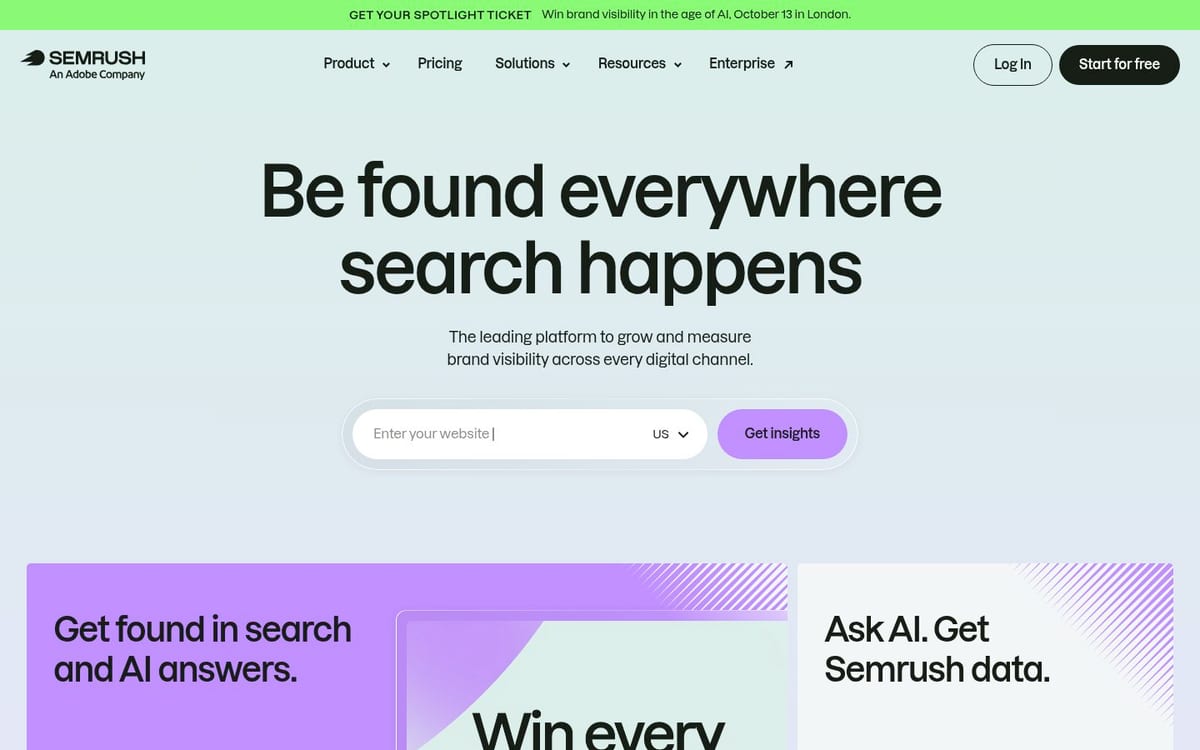
Semrush is a strong Moz alternative for teams already using its SEO, content, advertising, and competitive research products. Its AI visibility features let the team keep traditional search work and AI search performance in one operating environment.
Semrush is especially useful when the migration is less about finding a new AEO specialist and more about consolidating existing SEO workflows. Its official AI visibility documentation describes visibility, sentiment, prompts, and competitor analysis as part of the toolkit.
Pricing: Semrush pricing varies by product, plan, and AI search package. Its AI pricing page should be checked for the current combination your team needs rather than relying on a historical add-on price.
Best for: Marketing teams that already pay for Semrush and want to add AI search measurement without introducing another primary SEO platform.
Limitation: Semrush can be an expensive and complex choice if you only need AI citation tracking. It also favors a broad suite workflow, so teams that want a short action list may spend time configuring reports before they get to the work.
4. Conductor: best for enterprise AEO governance
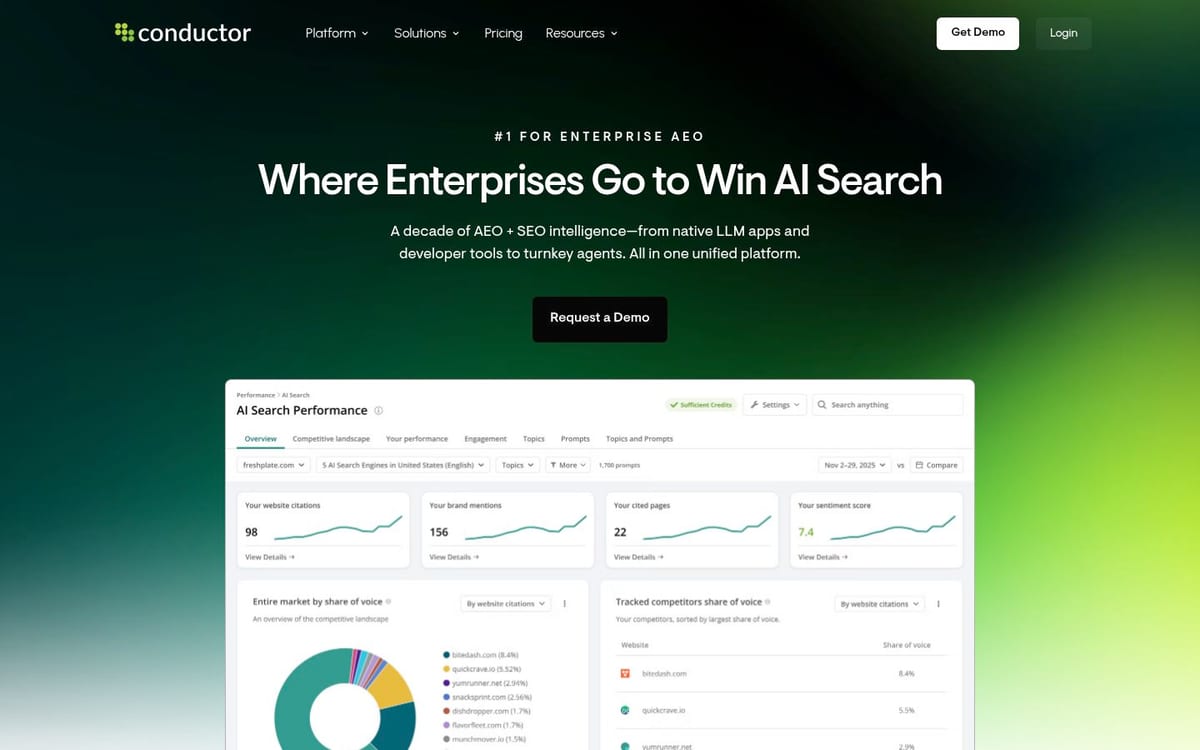
Conductor is a Moz alternative for enterprises that need AI visibility, content creation, technical monitoring, APIs, and governance in one platform. Its official platform description covers visibility across ChatGPT, Gemini, Copilot, Claude, and traditional search, along with content and monitoring products.
This is a fit for distributed teams that need permissions, repeatable workflows, and a shared source of truth. Conductor also exposes its AEO intelligence through APIs, MCP, LLM apps, and agents, which matters when the SEO team wants to build internal workflows around the data.
Pricing: Conductor uses a demo and sales-led buying process. Public pricing is not listed on its platform or pricing pages.
Best for: Large organizations with several markets, brands, or teams that need controls around AI search and SEO work.
Limitation: Conductor is likely too broad for a small team replacing Moz to monitor a few prompts and publish occasional content. The enterprise buying process also makes it harder to compare cost quickly.
5. BrightEdge: best for large SEO departments
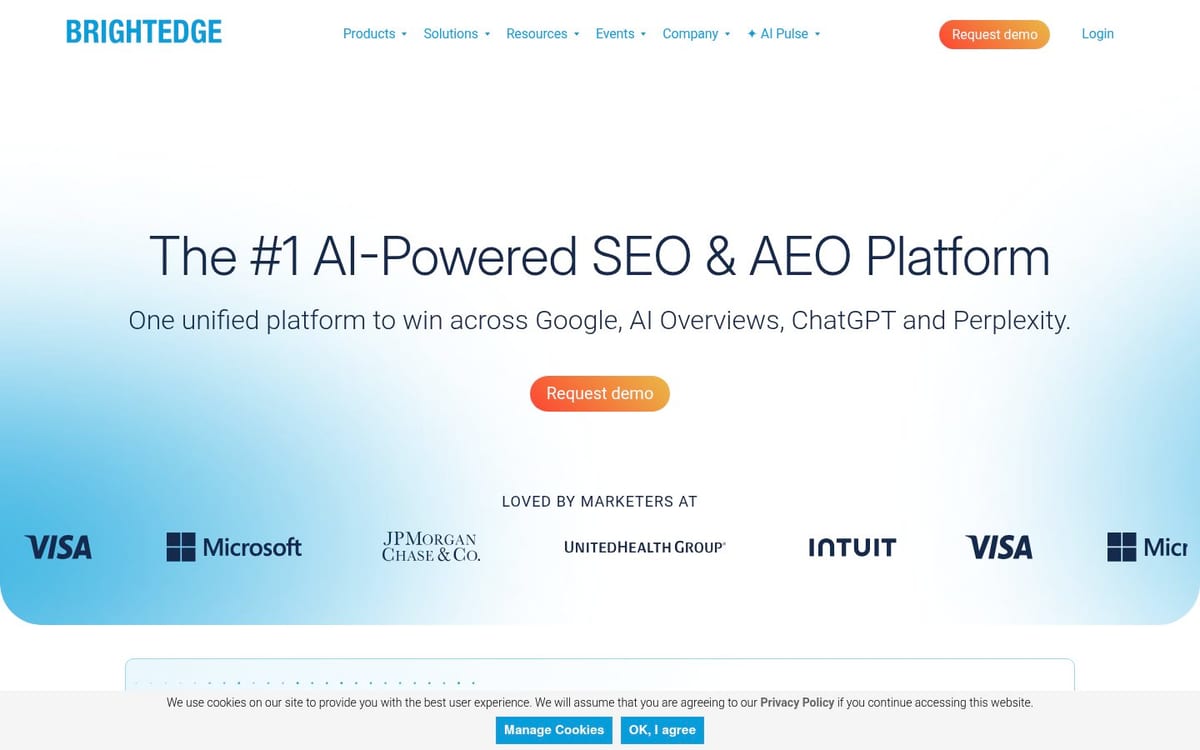
BrightEdge is a strong Moz alternative when SEO is already a large operating function. Its platform combines traditional search data with AI search products such as AI Hyper Cube, AI Catalyst, AI Agent Insights, and Agent Edge.
BrightEdge is built for teams that need demand intelligence, content recommendations, technical SEO, reporting, and enterprise services. Its AI Hyper Cube is positioned around AI conversations, brand mentions, citations, sentiment, and opportunities, while its broader platform connects that data to SEO workflows.
Pricing: BrightEdge does not publish standard self-serve pricing on its official site. Teams need to request a demo and receive a scoped proposal.
Best for: Enterprises with dedicated SEO staff, complex sites, and a need for executive reporting across traditional and AI search.
Limitation: BrightEdge is not a lightweight Moz replacement. Smaller teams may pay for organizational scale they will not use, and the sales-led process makes an initial shortlist harder to validate.
6. HubSpot AEO: best for HubSpot-centered teams

HubSpot AEO is a Moz alternative for marketing teams that already manage content, contacts, and campaigns in HubSpot. The product page positions AEO as a way to track and improve brand visibility in AI results, while HubSpot's wider platform connects marketing activity to CRM data.
That connection is the main reason to choose it. A team that wants to relate AI visibility to contacts, campaigns, and pipeline may get more value from a native HubSpot workflow than from a standalone SEO tool.
Pricing: HubSpot's AEO product is in beta and pricing can vary by product package. The official AEO product page lists the current trial and purchase paths.
Best for: Growth teams already committed to HubSpot that want AEO data near their CRM and marketing operations.
Limitation: HubSpot AEO is not a complete traditional SEO replacement for Moz, and the dedicated AEO coverage is narrower than some specialist platforms. Teams that need broad engine coverage, deep citation-source work, or content execution should compare it with a dedicated platform.
How do these Moz alternatives differ from Moz?
The key difference is the object each product measures. Moz primarily helps teams understand websites, links, keywords, and rankings. The alternatives above add a second object: the answer generated when a buyer asks an AI system for a recommendation.
That creates three migration paths:
- Keep the SEO workflow and add AI visibility. Choose Ahrefs or Semrush when traditional SEO remains central and the AI layer should sit beside it.
- Move to enterprise search governance. Choose Conductor or BrightEdge when multiple teams need a controlled operating system for SEO and AEO.
- Replace reporting with an action loop. Choose xSeek when the team needs to identify a gap, decide what to change, and track whether the change improves visibility.
You can also split the decision. Use an SEO suite for backlinks and keyword research, then use a dedicated AEO platform for prompts, citations, and recommendations. The right stack is the one that gives one person clear ownership of the next action.
FAQ
What are the best Moz alternatives?
The best Moz alternatives are xSeek, Ahrefs, Semrush, Conductor, BrightEdge, and HubSpot AEO, but each serves a different migration path. xSeek is strongest for action-first AI visibility, while Ahrefs and Semrush are better fits for teams that still want a broad SEO suite.
What is the best alternative to Moz for AI search optimization?
xSeek is the best alternative to Moz for teams focused on AI search optimization because it connects prompt tracking, competitor gaps, recommendations, content, and outreach actions. Conductor and BrightEdge are better suited to enterprise governance and large SEO departments.
Is Ahrefs better than Moz?
Ahrefs is better than Moz for teams that prioritize backlink research and large-scale search analysis. Moz can still be the simpler choice for teams that prefer its workflow, so the decision depends on the data your team uses every week rather than on a universal feature count.
Is Semrush a good alternative to Moz?
Semrush is a good alternative to Moz when you want a broad SEO and marketing suite with AI search features included in the same ecosystem. It is less compelling if you only need a focused AI citation tracker and do not need its wider toolset.
Are there free Moz alternatives?
Many platforms offer free audits, limited trials, or free tools, but a full replacement for Moz usually requires a paid plan. Check the official product pages for current limits because free access often covers a one-time scan rather than ongoing prompt, citation, backlink, and rank tracking.
Should I replace Moz or use it with an AI visibility platform?
Replace Moz when your team no longer relies on its traditional SEO workflows and wants one AI search operating system. Keep it alongside an AEO platform when backlink, keyword, and technical SEO data still drive your work and AI visibility is an additional channel.
Related articles
- Best Ahrefs Alternatives for AI Visibility in 2026
- Best Semrush Alternatives for AI Search Visibility (2026)
- What Is the Best AI Visibility Platform in 2026?
- Top AI Visibility Products in 2026
Sources & References
- xSeek pricing - xSeek plans and included limits.
- Ahrefs Brand Radar - Ahrefs AI visibility product.
- Semrush AI Visibility Toolkit - Semrush AI visibility capabilities.
- Conductor platform - Conductor AEO, monitoring, and workflow capabilities.
- BrightEdge - BrightEdge SEO and AI search products.
- HubSpot AEO - HubSpot AEO product and buying paths.