
Most AI visibility platforms give you a chart. A good one. Maybe a competitive breakdown, a share-of-voice graph, a citation count. You stare at it. Then you close the tab and wonder what to actually do next.
That's the dashboard problem. It's not a data problem. Marketing teams in 2026 have more data than they know what to do with. What's missing is the next step: a clear recommendation, ranked by impact, that tells you which content to write, which page to fix, and which query to target this week.
This guide compares six AI visibility platforms on the one dimension most reviews skip: do they tell you what to do, or just what happened?
According to Gartner's 2026 marketing technology survey, 67% of marketing leaders say data overload is their top barrier to acting on analytics. The tools that solve this aren't just trackers. They're closer to recommendation engines: platforms that turn raw visibility data into a prioritized to-do list.
The Two Types of AI Visibility Tools
Not all platforms are built for the same outcome. Before comparing tools, it helps to understand the fundamental split in the category.
Monitoring-first tools track what AI engines say about your brand. They show you citation counts, share of voice over time, competitor mentions, and sentiment trends. They answer the question: "What is happening?"
Action-first tools do all of that, but they also answer: "What should I do about it?" They surface content gaps, rank them by business value, generate optimization recommendations, and in some cases produce the actual content for you.
Most tools on the market are monitoring-first. A smaller group has crossed into action-first territory. That gap is where the real decision sits for marketing teams who are serious about growing AI citations, not just counting them.
A 2025 study by Princeton researchers found that brands using prescriptive GEO strategies (structured optimization actions, not passive monitoring) saw citation rates improve by 40% within 60 days. Brands that only tracked visibility saw no statistically significant change.
How We Evaluated These Platforms
Each tool below was assessed on four criteria:
- Prescription depth: Does it rank recommendations by impact? Does it tell you what to create, not just what's missing?
- Content generation: Can it produce the optimized article, page section, or FAQ answer directly?
- AI engine coverage: How many platforms does it track (ChatGPT, Perplexity, Gemini, Claude, AI Overviews, Grok)?
- Time-to-action: How many clicks between seeing a gap and having a fix in draft?
The comparison table below is the quick reference. The sections after it go deeper on each tool.
Comparison Table: Action-First vs. Monitoring-First
| Tool | Type | Prescription Depth | Content Generation | AI Engines | Entry Price |
|---|---|---|---|---|---|
| xSeek | Action-first | High: ranked opportunity plan | Yes, full article drafts | 7 (ChatGPT, Perplexity, Gemini, Claude, AI Overview, Copilot, xAI) | $249.99/mo |
| AthenaHQ | Action-first | High: on-page + off-page actions | Yes, via Content agent | 9 (adds AI Mode, Grok) | $295/mo (Starter) |
| Profound | Action-first | Medium: content generation + optimization | Yes | 10+ | $99/mo |
| Peec AI | Monitoring-first | Low: smart prompt suggestions only | No | 3 baseline | From €89/mo |
| Otterly AI | Monitoring-first | Low: no actionable insights | No | 4 | $25/mo |
| Ahrefs Brand Radar | Monitoring-first | None | No | 6 | Add-on from $199/mo |
xSeek: Built Around the To-Do List
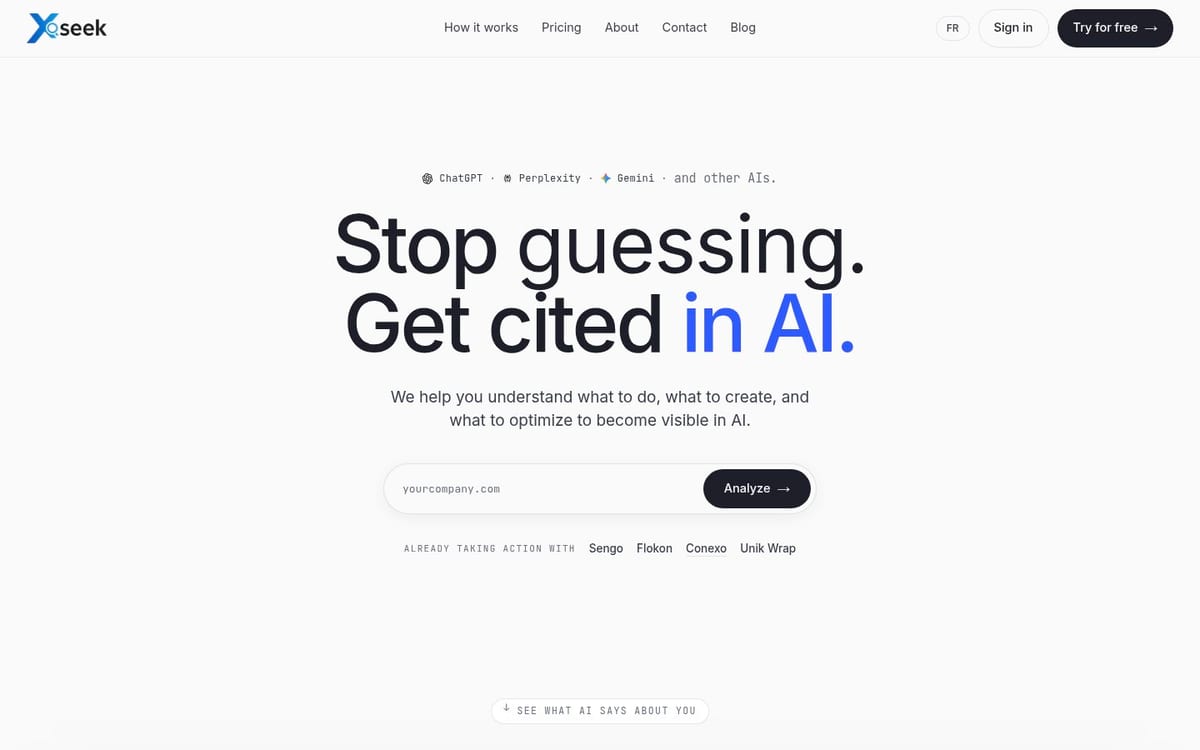
xSeek positions itself explicitly as "stop guessing, get cited." That framing runs through the entire product experience. You don't open xSeek to see data. You open it to see what to do next.
The core workflow has three steps: you see how AI perceives you, you get a prioritized plan of what to create and optimize, and you take action. That third step is where xSeek pulls ahead of most tools in this category. The platform generates full article drafts and optimized content suggestions, not just topic recommendations. A customer at Unik Wrap reported that "AI-automated recommendations save us hours every week."
xSeek's opportunity system ranks content gaps by business value (critical, high, medium) and assigns each one a suggested content type. You don't decide what to write next. The platform does.
On pricing, xSeek's Starter plan runs $249.99/month and includes 50 tracked prompts, 10 opportunities, and strategic onboarding. Growth is $499.99/month with 150 prompts and 25 opportunities. Scale is custom. Every plan includes a dedicated account specialist and strategic onboarding session, which matters for teams that want results without spending weeks learning the tool.
Seven AI engines covered: ChatGPT, xAI (Grok), Perplexity, AI Overview, Gemini, Claude, and Copilot.
Best for: Marketing teams and business owners who want direction, not just data. Especially strong for teams without a dedicated SEO analyst on staff.
The tradeoff: xSeek is not an enterprise compliance tool. If you need SOC 2 certification or HIPAA-grade data handling, look elsewhere.
AthenaHQ: Recommendations Backed by Enterprise Infrastructure
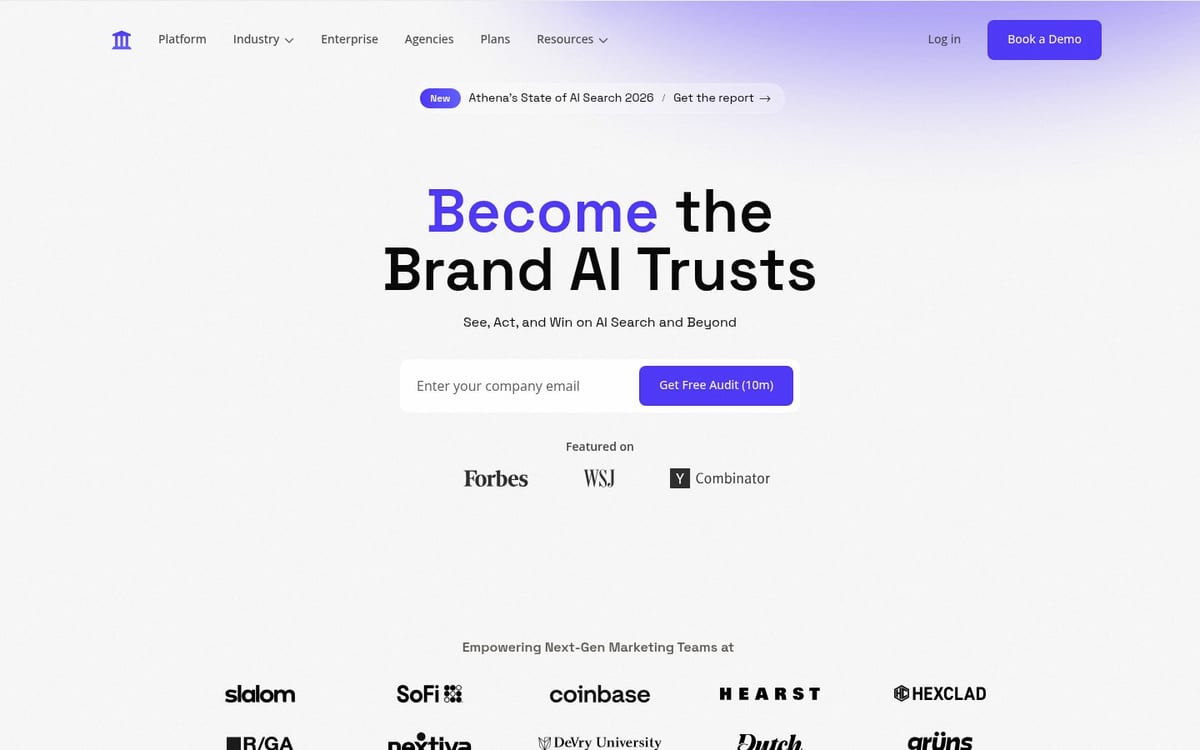
AthenaHQ describes itself as "the command center for AEO and GEO" and the prescription layer is genuinely deep. The platform's "Athena Content" recommendation engine identifies the specific gaps preventing citations, then produces on-page and off-page actions mapped to the exact sources AI models pull from in your category.
Where AthenaHQ stands apart is the "Ask Athena" copilot: a plain-language interface where you ask questions like "why is my competitor ranking above me on ChatGPT for project management prompts?" and get an immediate, data-backed answer. It's trained on your account's real-time data, competitive benchmarks, and citation tracking. That's meaningfully different from a static dashboard.
Customer results are public and specific: Grüns grew share of voice from 2.0% to 12.6% in 60 days; Popl saw 38% month-over-month lead growth from AI search.
Pricing: the Essential plan is free (with $25 in credits and 5 models). Starter runs $295/month for 9 AI engines and access to the content optimization agent. Enterprise is custom and adds persona targeting, multi-region support across 60+ countries, and BI tool integrations (Tableau, Power BI, Looker).
AthenaHQ holds SOC II Type 2 certification and is GDPR compliant, which makes it the most credible option for enterprise security procurement.
Best for: Enterprise and mid-market teams that need both prescription and compliance. Also strong for agencies managing multiple brands.
The tradeoff: The free and entry tiers are credit-based, which makes cost predictability harder than flat-rate pricing.
Profound: The Widest Data Moat
Profound earns its enterprise reputation through data depth. The platform tracks 10+ AI engines (including DeepSeek and Meta AI), publishes research from a 3.25 billion citation analysis, and maintains a Conversation Explorer built on 200M+ real user prompts.
The content optimization layer is real. Profound identifies questions your existing content could answer better, suggests where in the content to add them, and includes a Content Generation tool for creating new pages. The Workflows feature (in public beta as of 2026) adds automation for content operations.
Where it lands in the action-first category is "medium" rather than "high": the optimization suggestions are thoughtful, but the path from insight to published content involves more manual steps than xSeek or AthenaHQ.
Pricing: Starter is $99/month (50 prompts), Growth is $399/month (100 prompts). A dedicated AI strategist comes with the onboarding for enterprise tiers.
Best for: Enterprise teams that need coverage of every AI engine, including regional and emerging platforms. Strong for healthcare and regulated industries (HIPAA compliant).
The tradeoff: The $99/month Starter plan covers only 50 prompts, which fills up fast for multi-product or multi-market brands.
Peec AI: Smart Suggestions, Not a To-Do List
Peec AI sits at an interesting point in the spectrum. It does offer AI-powered prompt suggestions and a Looker Studio connector for live dashboard integration. The "smart suggestions" are mostly about which prompts and competitors to track, not what to do with the visibility data you're collecting.
The platform's Pitch Workspaces feature is useful for agencies: it generates shareable AI visibility reports for client presentations. That's a specific use case that the more action-oriented tools don't serve as well.
Baseline plans track three AI engines (ChatGPT, Perplexity, Google AI Overviews). More are available as add-ons at extra cost.
Pricing starts at €89/month for 25 prompts. Pro is €199/month for 100 prompts.
Best for: Agencies that need professional reporting for client presentations. Teams that already know what to do and just need monitoring data.
The tradeoff: Limited prescription. You won't find a ranked action plan or content generation here.
Otterly AI: The Affordable Starting Point
Otterly AI is the lowest-friction entry into AI visibility tracking. At $25/month for the Lite plan, it covers 15 daily tracked prompts across ChatGPT, Perplexity, Google AI Overviews, and Copilot. The GEO audit feature helps you understand how to optimize existing content for LLMs.
What Otterly doesn't have is actionable insights or trend data. The Zapier review noted specifically that "there's no data-driven guidance in terms of actionable insights and trends." You see citation data. You decide what to do with it.
That's not a flaw if you're a solo operator or a small team that already has a content strategist who can translate visibility data into action. For that use case, Otterly is genuinely the best value on this list.
Pricing: Lite at $25/month (15 prompts), Standard at $189/month (100 prompts), Pro at $989/month. A free trial is available.
Best for: Individuals and small teams with a limited budget who can translate data into action themselves.
The tradeoff: Zero prescription. Every decision about what to do comes from you.
Ahrefs Brand Radar: Benchmarking Without Direction
Ahrefs Brand Radar is a monitoring add-on for existing Ahrefs users. It tracks brand mentions across Google AI Overviews, AI Mode, ChatGPT, Perplexity, Gemini, and Copilot. The interface is clean and the benchmarking against competitors is straightforward.
What it doesn't do: tell you what to create, suggest what to fix, or generate any content. As the Zapier review noted, it "doesn't yet show conversation data, include citation source detection, or analyze AI crawler visibility."
Pricing: $199/month as an add-on to an existing Ahrefs plan.
Best for: Teams already running Ahrefs who want to add AI visibility data alongside their existing SEO workflow.
The tradeoff: It's monitoring only. The value case is consolidation into a tool you already use, not prescription.
Which Tool Fits Which Team
The right choice depends on one question: do you need the tool to tell you what to do, or do you already know?
If you're a lean team without a dedicated GEO analyst, you need prescription. xSeek and AthenaHQ are built for that. xSeek is the more accessible entry point with a cleaner action pipeline. AthenaHQ is the stronger choice for enterprise teams that need compliance, multi-region support, or BI integrations.
If you have an in-house strategist who can read visibility data and translate it into a content plan, you have more flexibility. Profound gives you the deepest data moat. Otterly gives you the lowest entry cost. Ahrefs Brand Radar keeps everything in one ecosystem.
Peec AI fits best if your primary output is client reporting.
Understanding how AI citations actually work is a prerequisite for using any of these tools well. If you're new to the mechanics, how AEO works and why it matters is a useful starting point before you evaluate platforms.
The tools in this category are evolving fast. A 2025 Gartner forecast predicted that AI search will handle more than 50% of traditional search volume by 2028. The brands that get cited consistently aren't the ones with the most impressions tracked. They're the ones that act on what the data tells them.
For teams new to generative engine optimization strategies, the core lesson applies here too: tracking without acting is just watching your competitors get recommended instead of you.
FAQ
What is an action-first AI visibility tool?
An action-first AI visibility tool goes beyond monitoring citation rates and share of voice. It produces ranked recommendations for what content to create, which pages to optimize, and which queries to target, often with content generation built in. The distinction matters because tracking visibility without a prescription doesn't change it.
Which AI visibility tool gives the best recommendations?
xSeek and AthenaHQ are the two platforms with the deepest prescription layers in 2026. xSeek is better for leaner teams that want a clear action plan without requiring a GEO specialist. AthenaHQ is stronger for enterprise teams that need compliance certifications, multi-region tracking, and BI integrations alongside the recommendation engine.
Can AI visibility tools replace an SEO agency?
Not entirely. Platforms like xSeek and AthenaHQ reduce the hours needed for analysis and content strategy, but they work best when paired with someone who understands the brand's positioning and can review generated content before publishing. They replace the research and drafting work, not the editorial judgment.
How many AI engines should a visibility tool track?
For most teams, 5-7 engines covers the platforms where their audience makes decisions: ChatGPT, Perplexity, Gemini, Google AI Overviews, and Claude. Tools that add Copilot, Grok, DeepSeek, and Meta AI make sense for enterprise teams with large, diverse audiences or regulated industries where specific platforms dominate.
What's the difference between GEO and AEO tools?
Generative Engine Optimization (GEO) and Answer Engine Optimization (AEO) describe the same practice under different labels. Wikipedia standardizes on GEO and lists AEO, LLMO, and AI SEO as synonyms. The tools in this article use both terms to describe the same capability: improving how AI engines cite and recommend your brand.
Is prescriptive analytics software the same as an AI visibility platform?
The overlap is growing. Prescriptive analytics software traditionally means platforms that recommend specific actions based on data analysis. The best AI visibility platforms in 2026 now meet that definition: they don't just show you data, they tell you what to do with it. xSeek, AthenaHQ, and Profound all qualify as prescriptive analytics platforms in addition to being visibility trackers.
How long does it take to see results from AI visibility optimization?
The median time from content publication to first AI citation is 6.81 days, according to Profound's crawl-to-citation research. Most brands that act on structured recommendations see measurable changes in share of voice within 30-60 days. Passive monitoring with no action produces no change in citation rates.
Sources & References
- Princeton GEO Research (KDD 2024): citation rate improvements from structured GEO methods
- Gartner AI Search Volume Forecast, 2025: 50% of search volume shifting to AI by 2028
- Profound Crawl-to-Citation Research: 6.81-day median publish-to-citation timing
- Wikipedia: Generative Engine Optimization: terminology standardization
- Zapier: Best AI Visibility Tools 2026: tool comparisons and feature data