
An AI visibility platform measures how often answer engines mention a brand, which pages they cite, how the brand compares with competitors, and what traffic or crawler activity follows. Those are four different signals, not four names for the same score. A useful measurement system keeps them separate so a marketing lead can tell whether a change improved recognition, evidence, visits, or access.
The distinction matters because an illustrative result can look like this: ChatGPT mentions Acme in 8 of 50 tracked answers, links to Acme's pricing page in 3, sends 12 referral visits, and an AI crawler requests that page twice. The first number is a mention rate. The second is citation coverage. The third is observed referral traffic. The fourth is crawler activity. None proves the others.
What does an AI visibility platform measure?
An AI visibility platform measures an organization's presence in generated answers and the evidence behind that presence. The core measurements are brand mentions, cited URLs, referral visits, and crawler requests, with sentiment, share of voice, prompt coverage, and competitor comparisons added as context.
Think of the measures as four checkpoints in a chain:
- Mention: Did the answer name you?
- Citation: Did the answer link to a page you control?
- Visit: Did a person arrive from an AI service?
- Crawler request: Did an automated agent request your page while collecting information?
The checkpoints can move in opposite directions. A brand can be mentioned without a link. A cited URL can receive no measurable visit. A crawler can request a page that never appears in an answer. A platform that combines these into one score without showing the raw counts makes diagnosis harder.
Four AI visibility metrics, with one worked example
The cleanest way to understand AI visibility metrics is to follow one question through each measurement layer. The example below is illustrative, not a benchmark.
Assume a team tracks this buyer question across 50 runs on ChatGPT, Perplexity, Gemini, and Google AI Overviews:
Which customer data platforms are best for a mid-market retailer?
The team records the full answer and its links, then checks analytics and server or CDN logs for the same period.
1. Brand mentions measure recognition in answers
Mention rate is the share of tracked answers that name the brand. If Acme appears in 8 of 50 answers, its mention rate is 16%.
That number answers: “How often does the model include us in this prompt set?” It does not tell you whether Acme is recommended first, described accurately, or linked. A platform may also classify variants such as a product name, parent company, or misspelling, so the team should review the matching rules.
Semrush calls this part of its Brand Performance reporting. Its official documentation says the report uses synthetic branded and non-branded prompts and analyzes responses across Google AI Overviews, AI Mode, ChatGPT, Perplexity, and Gemini, with weekly updates. That makes the prompt set and refresh schedule part of the measurement definition, not an implementation detail.
2. Cited URLs measure source selection
Citation coverage is the share of answers that link to a page, domain, or source associated with the brand. If three of the 50 answers cite Acme's pricing page, Acme has 6% URL citation coverage for this illustrative set.
Citation coverage answers a different question: “Which evidence did the answer engine use or show?” It is more actionable than a mention alone because it points to a page that a content or SEO team can inspect. Review the exact URL, anchor text, surrounding claim, and whether the page is an owned asset or a third-party source.
Ahrefs Brand Radar separates mentions, citations, and impressions in its overview reporting. Its documentation also says the product can identify top cited pages and domains across its AI visibility data. That is useful evidence for source analysis, but it is an indexed dataset, not a direct record of every live answer a customer might receive.
3. Referral visits measure observed acquisition
AI referral visits are sessions whose referrer or channel data identifies an AI service. If analytics records 12 sessions from ChatGPT and Perplexity during the test window, those are observed visits, not estimated mentions.
Referral visits answer: “Did people click through from an AI answer to our site?” They can be lower than citation counts because users may read the answer without clicking, use an app that hides the referrer, or see a citation but choose another source. They can also be higher than expected when older answers, untracked prompts, or third-party pages send traffic.
Use analytics for visits and conversions, not a prompt tracker. Semrush describes its AI Traffic dashboard as a clickstream-based estimate of competitor AI traffic, while its reporting integrations can connect AI referral traffic and conversions with Google Analytics. Treat those as a different evidence class from direct prompt observations.
4. Crawler requests measure access, not recommendation
Crawler requests are requests from identified AI agents such as search or retrieval bots. If a CDN log records two requests from an AI crawler to Acme's pricing page, that shows access during the period. It does not show that a model cited the page or that a person saw it.
Crawler data answers: “Could an identified automated agent reach this page, and when?” It can reveal blocked user agents, status errors, response delays, and the pages that receive attention. It cannot, by itself, measure brand visibility.
xSeek treats crawler access as a technical signal alongside answer evidence. Its site describes AI crawler tracking through integrations such as WordPress, Cloudflare, Amazon CloudFront, and an HTTP API. That is a different job from asking an AI engine a buyer question and counting the answer.
How Semrush, Ahrefs, Profound, and xSeek report different evidence
These products overlap in category language, but their evidence is not interchangeable. The right comparison is not “which score is highest?” It is “what was observed, modeled, or recommended?”
| Platform | Evidence it emphasizes | What the marketing lead should ask |
|---|---|---|
| Semrush | Prompt-based mentions, citations, sentiment, competitor comparisons, AI traffic estimates, and technical audits | Was this result generated from Semrush's prompt database, selected prompts, clickstream estimates, or a crawl? |
| Ahrefs Brand Radar | Indexed AI answers, share of voice, mentions, citations, impressions, and source channels | Is this a historical index result, a custom prompt check, or a web visibility signal? |
| Profound | Answer Engine Insights, prompt volumes, cited sources, brand context, and agent analytics | Is the report showing observed answer evidence, prompt demand, or work completed by an AI marketing agent? |
| xSeek | Tracked buyer questions, named competitors, cited pages, AI visits, crawler access, and action plans | Can the team connect a visibility gap to a specific page, task, and later change in the raw evidence? |
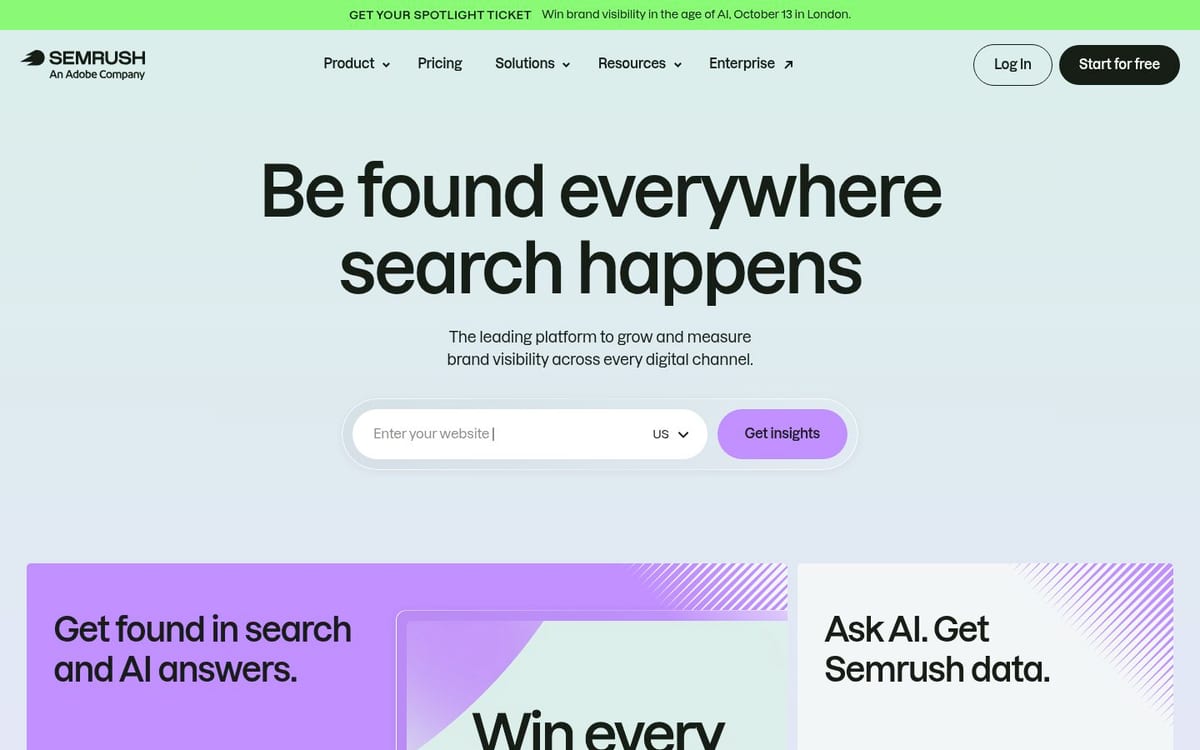
Semrush
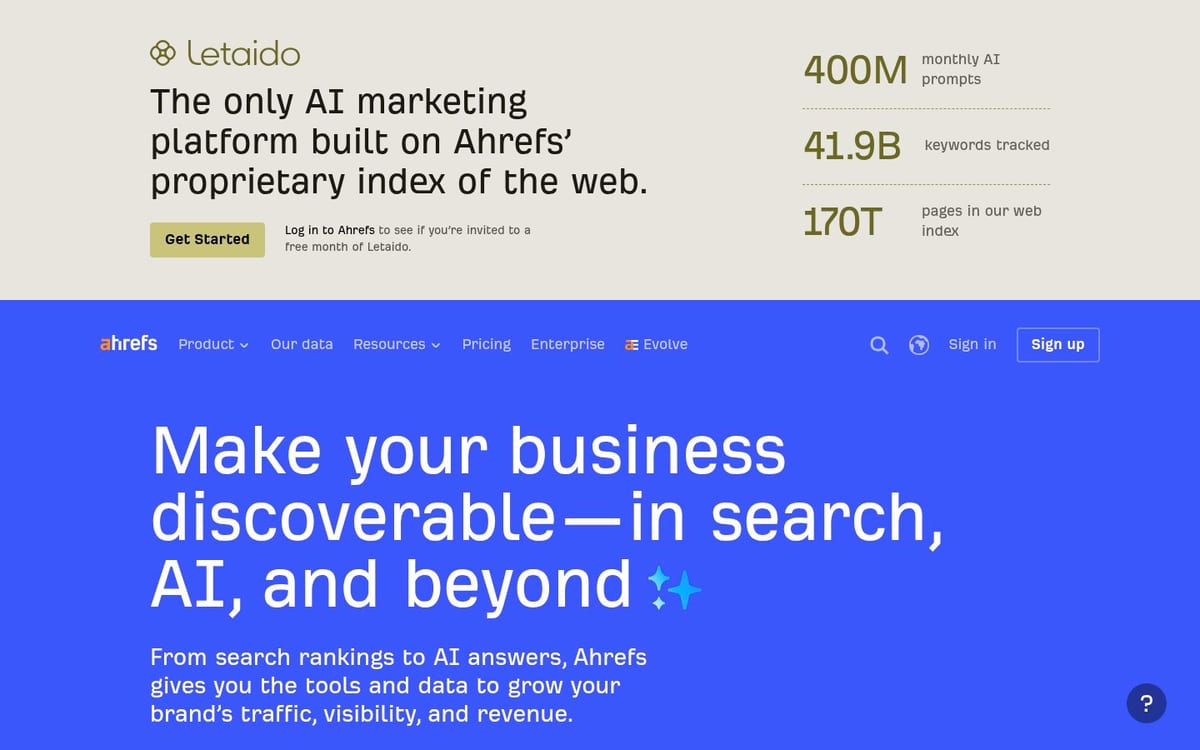
Ahrefs Brand Radar
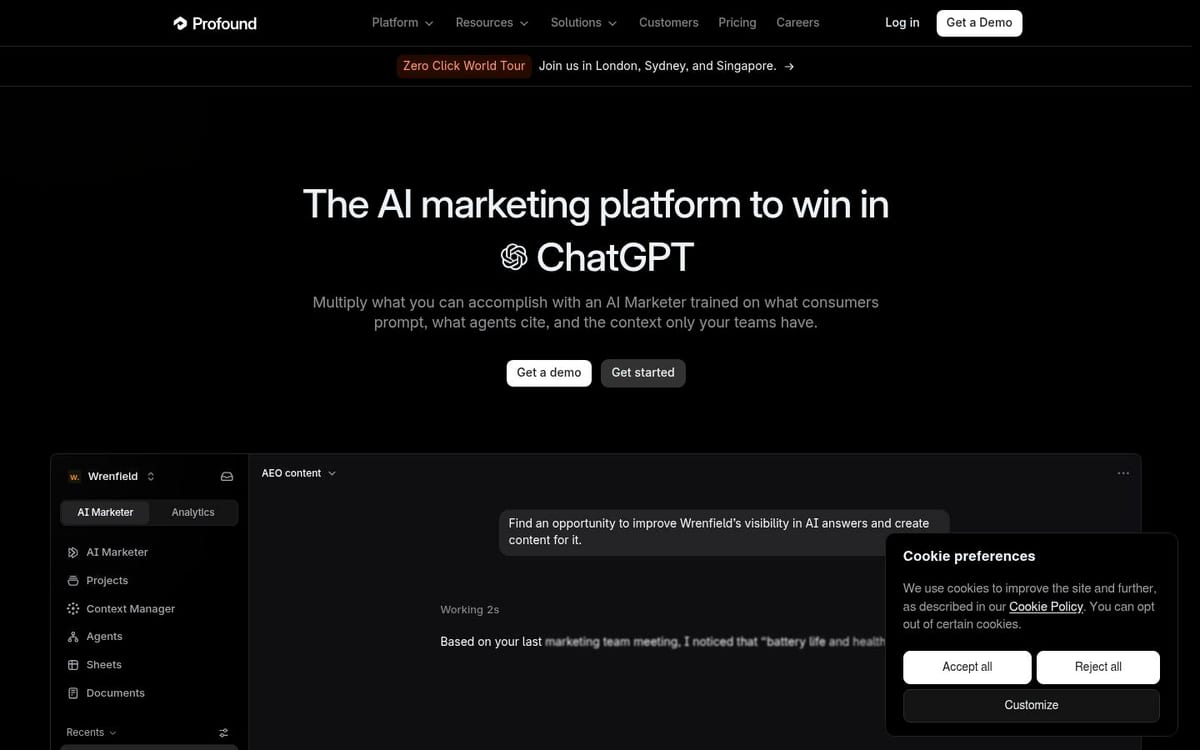
Profound
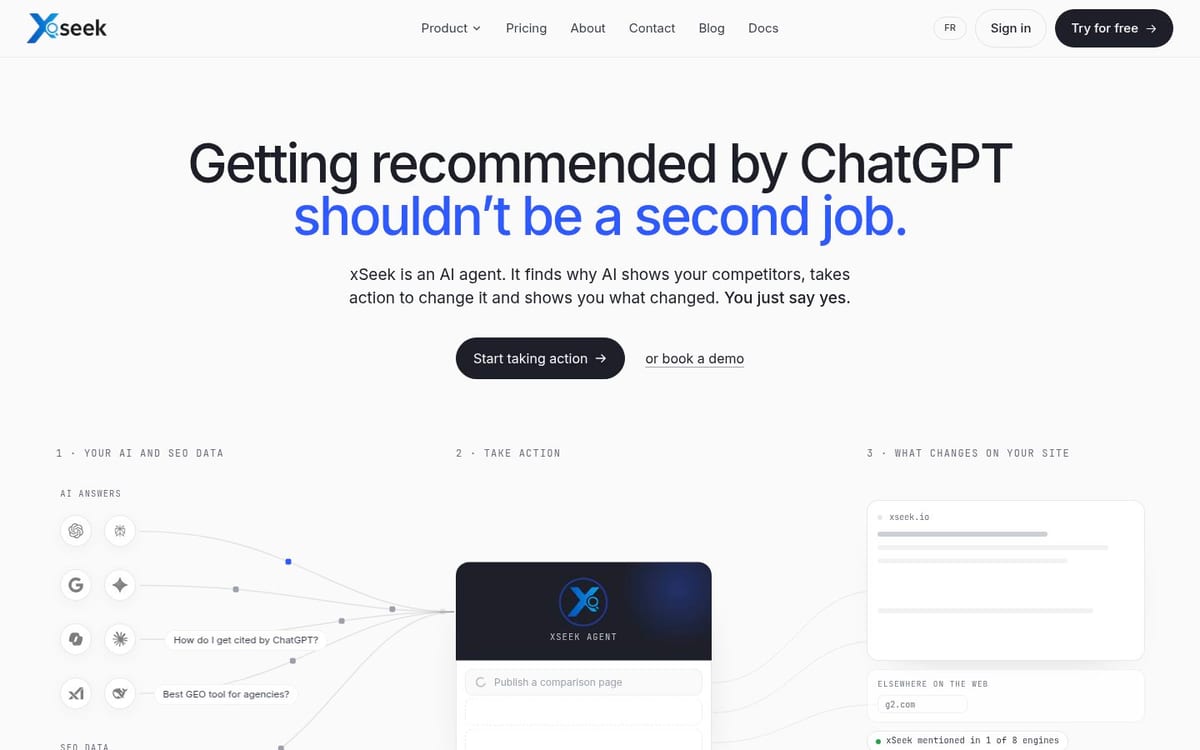
xSeek
Semrush and Ahrefs make broad discovery and benchmarking central to their products. Semrush documents a prompt database and separate traffic estimates. Ahrefs says Brand Radar draws on more than 405 million search-backed prompts across seven AI platforms, while its chatbot indexes update monthly. Those details affect how quickly a report can reflect a change.
Profound presents a wider marketing workspace. Its platform groups Answer Engine Insights and Prompt Volumes with agents, context management, and analytics. That can be useful when the goal is to move from measurement into execution, but a report should still label whether a number came from a prompt observation, a volume model, or an activity log.
xSeek's useful distinction is between the answer and the next action. Its homepage says the product asks buyer questions, shows who AI names and which pages it cites, and keeps proof of before-and-after changes. That workflow suits a team that needs to turn a measurement into a content or technical task. It does not remove the need to inspect the underlying prompt runs.
Which AI visibility metrics should a marketing lead use?
Use a small metric set tied to a decision. Start with mention rate, citation coverage, and cited URL quality for demand generation. Add share of voice when you need a competitor view, sentiment when inaccurate or negative descriptions matter, referral visits when you need acquisition evidence, and crawler requests when access may be the constraint.
For each tracked question, keep these fields:
- Prompt text, market, language, engine, model, and run date
- Whether the brand was mentioned and where it appeared in the answer
- Whether a URL was cited, the exact URL, and the cited claim
- Which competitors appeared and how often
- AI referral sessions and conversions in the matching period
- Crawler user agent, requested URL, status code, and response time
This record prevents false conclusions. If mentions rise from 8 to 14 but citations stay at 3, the brand is more recognizable but its owned evidence has not improved. If citations rise to 10 but referral visits stay at 12, the source may be useful to the model without creating measurable traffic. If crawler requests fall to zero after a robots or CDN change, investigate access before judging the content.
How to choose a measurement system
Choose the system that exposes raw evidence close to the decision you need to make. A CMO proving acquisition impact needs analytics joins and conversion reporting. An SEO lead fixing source coverage needs cited URLs and prompt-level answer captures. A technical lead needs crawler logs, status codes, and bot identity. A content team needs the question, missing answer, and page-level task in one workflow.
Ask vendors these questions before comparing dashboards:
- Are prompts real, custom, synthetic, search-backed, or modeled?
- Can we export the full answer and cited URLs, not just a score?
- How often does each engine or index refresh?
- Are referral visits direct observations or estimates?
- Are crawler requests tied to our logs or inferred from another dataset?
- Can we separate brand mentions from product, parent-company, and competitor mentions?
- What changed when the score moved?
The strongest answer is not one platform winning every category. It is a measurement design where each number has a clear source, time window, and use.
FAQ
What does an AI visibility platform measure?
It measures how a brand appears in AI-generated answers, including mentions, cited pages, competitors, sentiment, and share of voice. Some platforms also report AI referral visits, prompt demand, and crawler requests, which should remain separate from answer visibility.
What are the most important AI visibility metrics?
Start with mention rate, citation coverage, cited URL quality, and competitor share of voice. Add referral visits for acquisition reporting and crawler requests for technical access checks.
Is an AI brand mention the same as an AI citation?
No. A mention is the brand name appearing in an answer. A citation is a linked source or page that the answer presents as evidence, so a brand can be mentioned without receiving a citation.
Do AI visibility platforms measure traffic from ChatGPT?
Some platforms report AI referral traffic, but the evidence may be observed in analytics or estimated from clickstream data. Check the report definition before treating a traffic number as a direct count of visitors from a specific answer.
What do AI crawler requests tell you?
They show that an identified automated agent requested a page and can expose access problems such as blocks, errors, or slow responses. They do not prove that a model cited the page or that a buyer saw it.
How often should AI visibility be measured?
Measure on a consistent schedule that matches the data source. Prompt-based tracking can run daily or weekly, while some indexed chatbot datasets refresh monthly, so compare like with like instead of mixing refresh cycles.
Can an AI visibility score prove marketing ROI?
No single score proves ROI. Connect prompt and citation evidence to analytics sessions, conversions, pipeline, or revenue, and keep the score as a summary rather than the financial outcome.
Sources & References
- Semrush Features for AI Visibility - prompt, citation, traffic, and audit definitions
- Ahrefs Brand Radar documentation - indexed AI visibility evidence and refresh details
- Profound - Answer Engine Insights, prompt volumes, and agent analytics
- xSeek - tracked questions, citations, visits, and crawler workflow
- Zapier AI visibility tool review - practical distinctions among visibility signals